EungGu Yun윤응구

AI Researcher at KRAFTON

Seoul, Korea

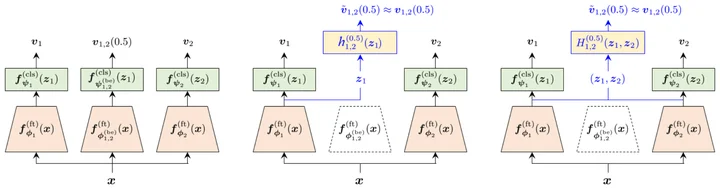
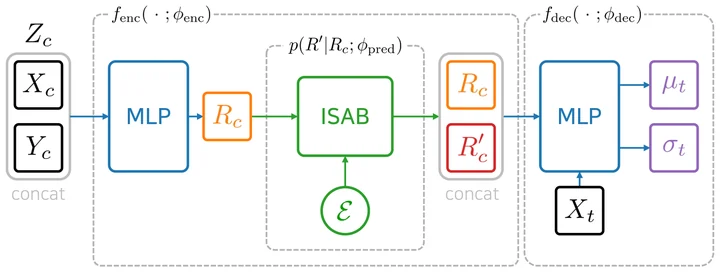
I am an AI researcher at KRAFTON, working on the evaluation of large language models and speech models. My background includes research on neural-network loss landscapes at KAIST and on image anomaly detection and language-assisted vision at SAIGE.

Experience

  1. KRAFTONPresent

    AI Researcher

    AI Research Division

    Aug 2026 – PresentSeoul, Korea
    • Evaluate large language models and speech models.
    • Assess model capabilities and examine their behavior in conversational and agentic settings.
  2. SAIGE

    AI Researcher

    AI Laboratory

    Mar 2023 – Jul 2026Seoul, Korea
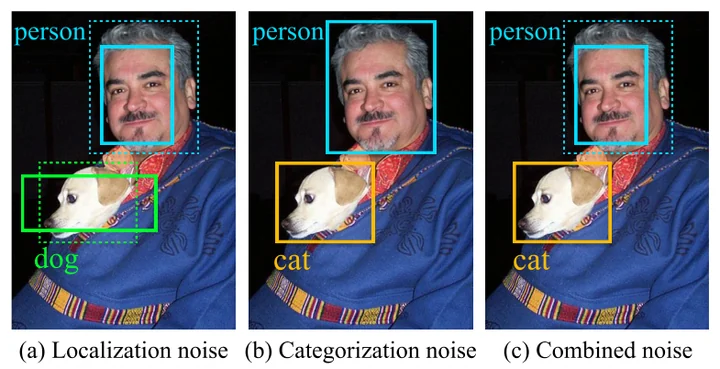
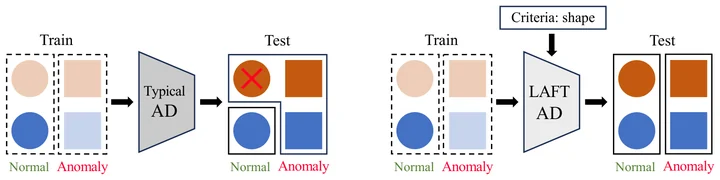
    • Research on image anomaly detection (IAD) systems for industrial inspection.
    • Research language-assisted vision models for data-efficient training.
    • Conduct TensorRT-based optimization for real-time inference in object detection and tracking.
    • Fine-tune VLMs for context-aware industrial safety monitoring.
  3. Jul 2020 – Sep 2020Seoul, Korea
    • Supervisor: Yoo-mi Park
    • Tested and debugged ETRI Deep Learning HPC Platform Dashboard.
    • Implemented AlexNet and ResNet models with DL-MDL.

Education

  1. Mar 2021 – Feb 2023Daejeon, Korea
  2. B.S. in Computer Science and Engineering

    SungKyunKwan University (SKKU)

    College of Computing

    Mar 2017 – Aug 2020Seoul, Korea
    • Total GPA: 4.33 / 4.5
    • Major GPA: 4.47 / 4.5

Publications14

Projects

  • Bayesian Inference for Time-series Data with Missing Values

    Samsung Research

    Aug 2022 – Feb 2023
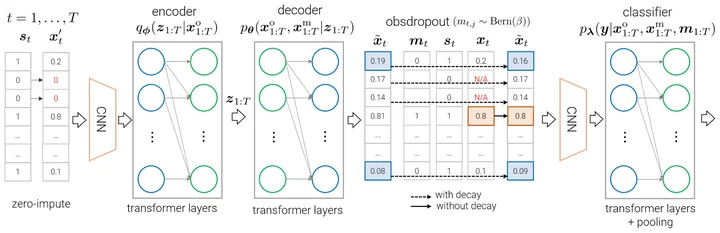
    • Developed a Bayesian deep learning method to quantify uncertainty within missing values.
    • Proposed a multivariate time-series classification model using ObsDropout regularization.
    • Validated on PhysioNet 2012, MIMIC-III, and UCI human activity datasets.
  • Developing AI-based Emulator for Physics Processes in Numerical Models

    National Institute of Meteorological Sciences (NIMS)

    May 2021 – Jul 2022
    • Researched alternative AI-based techniques for physical processes in numerical weather prediction (NWP) models.
    • Goal: reduce computational costs and improve accuracy of NWP.

Awards & Honors

Academic Service

Skills

Programming

  • Python
  • JavaScript
  • C
  • C++
  • LaTeX

Deep Learning

  • PyTorch
  • JAX
  • TPU

Systems

  • Linux
  • Docker
  • Google Cloud

Languages

  • Korean (native)
  • English (intermediate)